
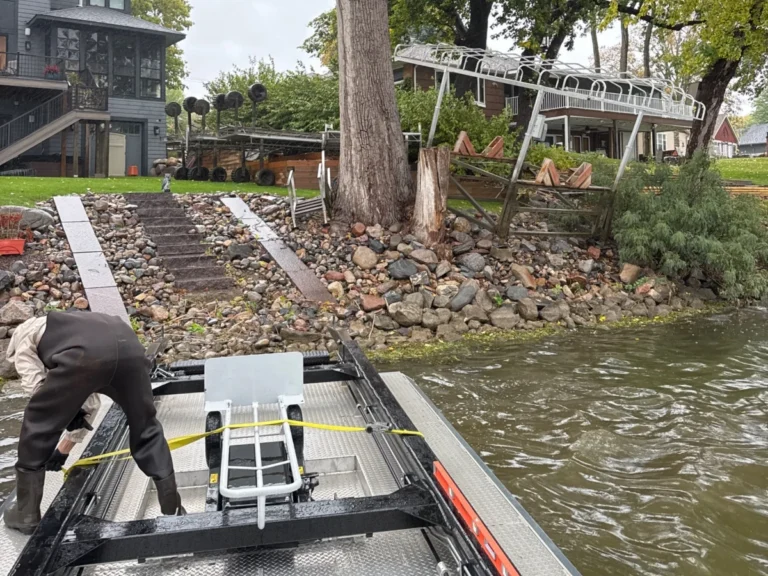
 BigWave job
Roll-in dock
The sections ride on wheels. In spring the dock rolls out mostly assembled, and in fall it rolls back onto shore.
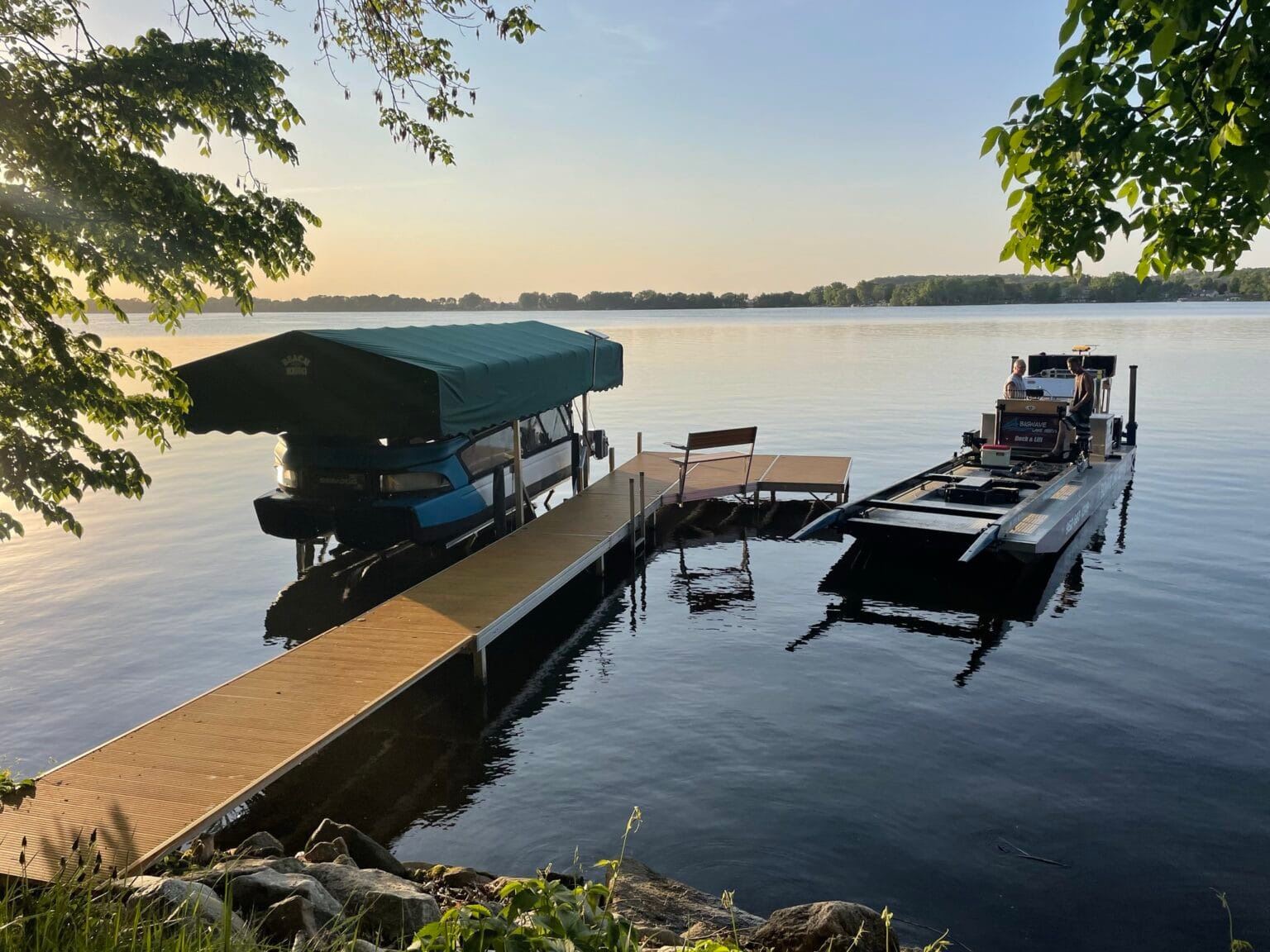
Choosing a dock
Updated October 10, 2026
Your lake bottom, water depth and winter storage decide it.
Answer four questions. The fit updates as you pick.
Fits your shoreline
Roll-in dock
Wheels roll easily on a firm, gentle bottom, and the dock goes in and out mostly assembled.
This check needs JavaScript. In short: roll-in for firm and shallow, sectional for muck, rock or tight storage, floating for deep or changing water.
A BigWave specialist confirms the fit on your shoreline before you buy.
01 / The types
All three hold you over the water. What holds them up decides which shoreline each one suits.
BigWave jobThe sections ride on wheels. In spring the dock rolls out mostly assembled, and in fall it rolls back onto shore.
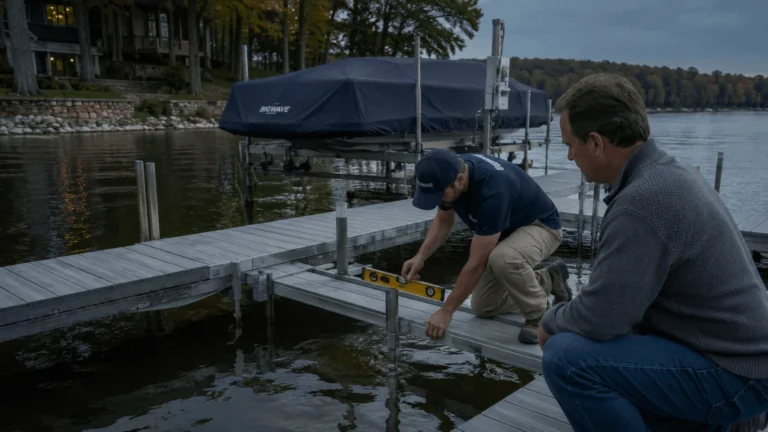 BigWave job
Frames sit on adjustable legs set on the lake bottom. Some call it a pipe or standing dock. In fall the sections come apart and stack.
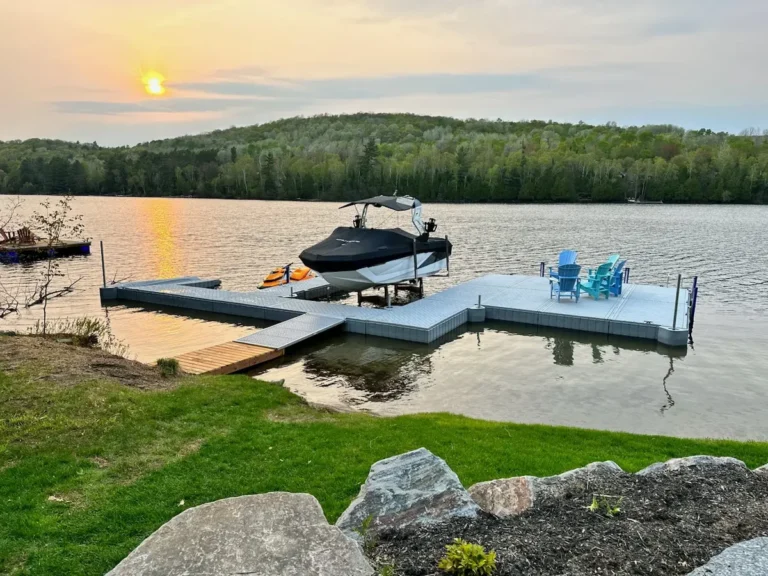 ShoreMaster
The deck rides on floats held in place by anchors or posts, so it rises and falls with the water.
Not sure what you have now? Wheels mean roll-in, legs with no wheels mean sectional, and floats under the deck mean floating. BigWave sells and installs docks from ShoreMaster, Beach King and Tonka Built.
02 / Muck
Muck is the soft layer of silt and old plant matter on many Minnesota lake bottoms. Legs and wheels sink into it, and a dock that sinks unevenly goes out of level.
Roll-ins struggle
Their wheels need firm ground, so they have the most trouble here.
Sectionals spread the weight
Wide foot pads, or a lake mat underneath, keep the legs from sinking. BigWave sells Lake Mat mats, including the Muck Mat line.
Floating skips the bottom
In very deep muck, a floating dock barely touches it.
03 / Each season
Each type goes in and out differently, and spends the winter differently.
Roll-in
Fastest in and out, but it sits on shore all winter. One cabin owner on a Minnesota fishing forum passed on one: “I didn’t want to look at it all winter in my front yard.”
Sectional
Slower, because every leg has to be leveled again in spring. The frames stack out of sight.
Floating
Unhooks from its anchors and comes in as larger pieces.
BigWave’s seasonal rates, each way
4-foot-wide roll-in or sectional$4.50 / ft
5-foot-wide roll-in or sectional$5.75 / ft
Floating dock$4.50 / ft
Minimum for any dock$200
Some things can’t be seen up front, so the price lands right on or very close. See seasonal dock and lift setup and removal.
04 / Rules
The rules care about width and length more than dock type.
Minnesota DNR
No permit is needed when no part of the dock is wider than 8 feet and it meets a few other conditions.
Lake Minnetonka
The Lake Minnetonka Conservation District (LMCD) says docks “may exceed 8 feet in length or width, but not both.”
Your city
Cities can add limits of their own, so check before you build.
Read Minnesota DNR rules for docks and lifts before you settle on a layout.
05 / Questions
Any of the three can sit beside a lift. On a soft bottom the lift legs sink too, so a mat under the lift helps both stay level.
Price depends on length, width, decking and brand, so BigWave prices a new dock after looking at your shoreline. Aluminum has climbed: the producer price index for aluminum mill shapes rose 30.5 percent from December 2024 to December 2025, according to the Associated General Contractors of America.
Often, yes. Many roll-in and sectional docks adjust from the deck with a crank or screw at each leg, so you don’t have to wade in. Floating docks sit level on the water by design.
Talk with a BigWave specialist. We look at your shoreline, put together options and prices, and you decide.