Owning lake equipment in Minnesota comes with rules, and most owners only find out about them the hard way.
Last Updated: 08/24/2026.
What the hard way looks like:
- Putting equipment in the water with aquatic plants attached carries a $200 civil penalty under Minnesota law.
- If zebra mussels or another prohibited invasive species are attached, that rises to a $500 civil penalty or a misdemeanor. Minnesota DNR
- A dock built outside the DNR’s standard conditions can mean a permit problem after the dock is already in the water, when fixing it costs the most.
The good news:
- Most standard residential docks do not need a DNR permit.
- The rules that do apply are mostly about one thing: keeping invasive species out of clean lakes.
- Knowing the basics takes ten minutes, and this guide covers them.
One thing before we start: rules change.
- This article reflects DNR guidance as of publication, and it is an overview, not legal advice for your specific property.
- Always confirm current requirements with the Minnesota DNR before you finalize plans.
Why Minnesota has these rules
Every lake in Minnesota is a public water, and the biggest threat to those waters travels on equipment.
- Zebra mussels, Eurasian watermilfoil, and other aquatic invasive species spread between lakes by hitching rides on boats, trailers, docks, and lifts.
- Aquatic invasive species change the environment of the water, which can harm native species of fish and plants. Once they are in a lake, they do not leave. Minnesota DNR
- So the rules focus where the risk is: equipment going into the water, and equipment moving between waters.
If you understand that, the rest of the requirements make sense.
Start with docks: when you need a permit and when you do not
Most residential docks are permit-free, as long as they stay modest.
Under current DNR guidance, no permit is needed to install, construct, or reconstruct a dock on shoreline property you own if you meet the conditions, including that no area of the dock is wider than 8 feet, the dock is not combined with other structures to create a larger structure, and the dock is no longer than needed to reach your mooring depth. Minnesota State PortalWblcd
A few more things worth knowing:
- A shoreline owner can request a permit for a dock wider than 8 feet, but the applicant must show a specific need and show that the wider dock is the minimal-impact solution. Docks serving single-family homes generally will not need a dock wider than 8 feet.
- A dock platform at the lake end is automatically authorized under General Permit 2008-0401 if its requirements are met, with no application needed. Minnesota State Portal
- The DNR prefers temporary structures over permanent ones, because permanent structures are more likely to sustain ice damage, and a snow-covered structure over the ice poses a hazard to recreational vehicle users.
The takeaway: a typical sectional dock, sized for your boat and your family, is usually fine without paperwork. Bigger, wider, or unusual plans are where you talk to the DNR first. If you have questions, the DNR points owners to their Area Hydrologist.
Planning a new dock right now?
- Our guide on planning a new dock: shoreline & layout help covers the property-fit questions that come before any of this.
Do you need a permit for a floating dock in Minnesota?
Usually not. Under current DNR guidance, a floating dock on your own shoreline needs no permit if it meets the standard conditions: no section wider than 8 feet, no longer than needed to reach mooring depth, and not combined with other structures. Larger or unusual setups should be checked with the DNR first.
Next, boat lifts and other equipment
Lifts follow the same basic logic as docks.
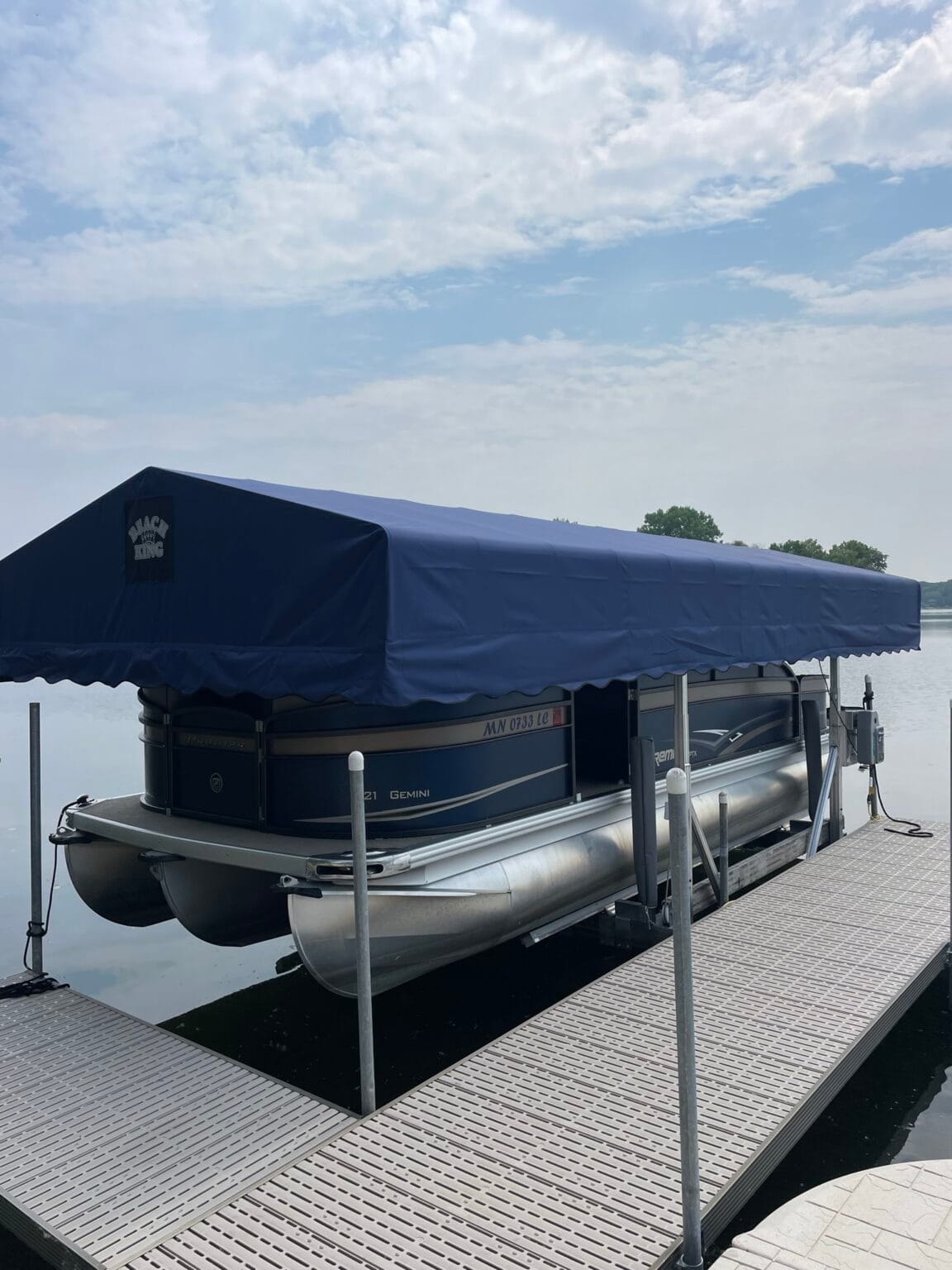
- Under DNR guidance, a permit is not required to construct, reconstruct, or install docks, floating or temporary structures, watercraft lifts, and mooring equipment that meets the standard conditions.
- The rules that matter most for lifts are not about installing them. They are about moving them, which is where the invasive species laws take over. More on that next.
If you are still choosing a lift, start with preparing for boat lift fit & capacity planning so the lift conversation starts with the right details.
Then, the AIS rules every equipment owner follows
These are not suggestions. This is Minnesota law, whether or not your lake has invasive species.
Minnesota law requires people to clean watercraft, trailers, and equipment to remove aquatic plants and prohibited invasive species, drain all water and leave drain plugs out during transport, dispose of unwanted bait in the trash, and never release bait, plants, or aquarium pets into Minnesota waters.
And the one lake equipment owners trip over most, the 21-day rule:
- Minnesota law requires that docks and lifts remain out of the water for at least 21 days before they can be placed into another waterbody.
- That matters any time equipment changes lakes: buying used, selling, moving to a new property, or lending a lift to the cabin.
- The 21-day rule does not apply to boats or jet skis, but they should still be cleaned and checked for invasive species.
- Anyone who transports a dock or lift with attached zebra mussels from a shoreline property to another location for decontamination needs a free permit to transport it legally.
- If equipment may be moved to another lake, planning fall dock and lift removal early can help account for the required 21-day out-of-water period.
Extra steps the DNR recommends beyond the law:
- Use free courtesy decontamination stations, spray equipment with high-pressure water or rinse with water, and dry watercraft and gear at least five days before using them in another water body.
Moving equipment between lakes or into storage is exactly where these rules bite. Our transport and storage page covers how that gets handled properly.
Lastly, hiring it out: what the DNR says about service providers
If a business touches your dock or lift, the DNR has a standard for that too.
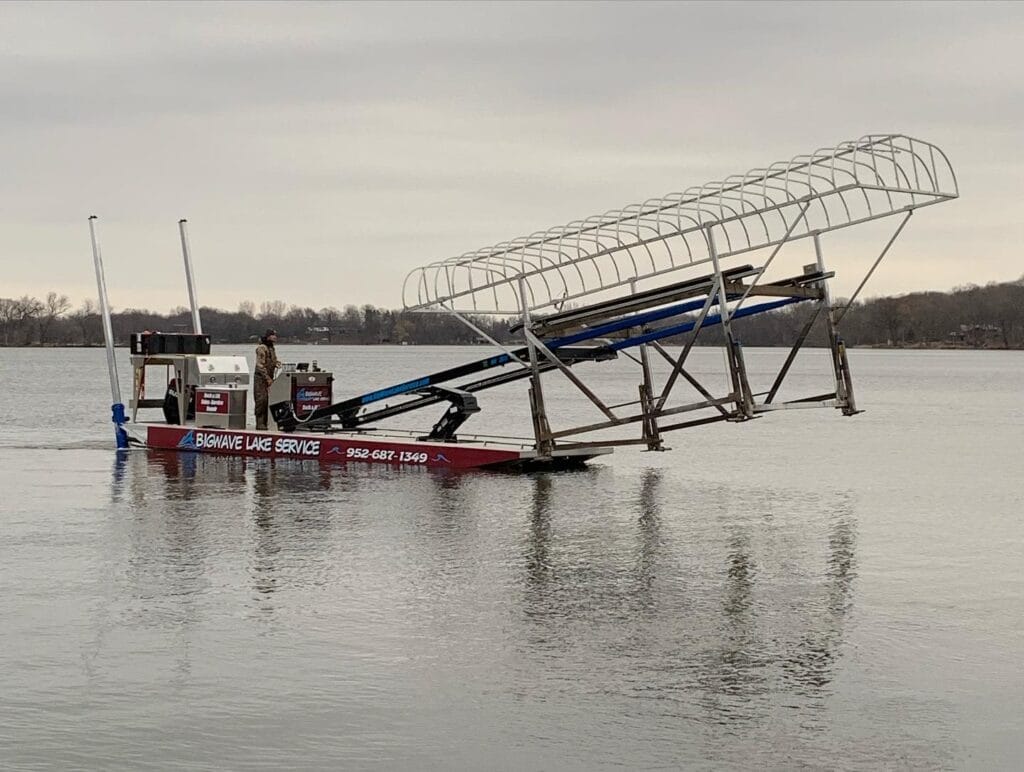
- When using a business to place or remove your dock, the DNR says to make sure they have a valid Lake Service Provider permit and that the staff have an aquatic invasive species training certificate.
- DNR-permitted lake service providers have been trained on Minnesota’s aquatic invasive species laws and have experience identifying and removing invasive species.
So when you are comparing companies for seasonal work, that is a fair question to ask any of them: are you a permitted lake service provider, and is your crew AIS trained?
If seasonal install and removal is the job, see our seasonal dock & lift setup and removal service.
Do not forget the local layer: city, county, and watershed dock regulations
The DNR is not the only rulemaker on your lake. Three more layers of dock regulations can apply, and they vary lake to lake.
Cities. Cities can regulate docks, slips, and mooring on top of state rules. On Prior Lake, the city’s boat slip ordinance limits personal boat slips to five or fewer watercraft, ties slip counts to feet of shoreline, and prohibits renting out personal slips. Violations can end in a misdemeanor citation and a fine. City of Prior Lake
Counties. Counties often enforce the water surface use rules on your lake. On Prior Lake and Spring Lake, the Scott County Sheriff’s Office enforces the surface use ordinance, including the permanent 150 foot slow no wake zone around the entire shoreline. Shoreline owners who want marker buoys for that zone apply through the Sheriff’s Office. City of Prior Lake
Watershed districts and lake groups. Watershed districts, like the Prior Lake-Spring Lake Watershed District, manage water levels, shoreline projects, and invasive species work that can affect what happens at your shore. Lake associations sometimes publish their own dock and boating standards as well.
The takeaway: before you build, expand, or change anything at the shoreline, make one call to your city, and check your county’s surface use rules and your lake association’s standards alongside the DNR guidance. The rules stack, and the lowest layer of government is usually the one that shows up first.
When to bring in BigWave
You do not have to become a regulations expert to own a dock. You just need a setup done right and moved right.
BigWave plans dock and lift setups around the shoreline, the water, and how the family uses the lake, and handles equipment with the care these rules exist to protect. If a project raises a permit question, the answer comes from the DNR, not from guessing.
You can explore new dock sales, design & installation to see how the process works, or ask us about a specific piece of equipment you are planning to move.
FAQs
Do I need a DNR permit for a typical residential dock?
Usually not. Under current DNR guidance, a dock on your own shoreline that meets the standard conditions, including staying under 8 feet wide and no longer than needed, does not require a permit. Larger or unusual structures can. Verify your specific plans against the DNR’s dock guidance or your Area Hydrologist before building.
What is the 21-day rule?
Minnesota law requires docks and lifts to stay out of the water for at least 21 days before going into a different waterbody. It exists because invasive species attach to equipment and survive short moves. It applies to docks, lifts, and rafts, not boats, though boats have their own clean and drain requirements.
Does buying a used dock or lift come with rules?
Yes, the same ones. The 21-day dry period applies before the equipment goes into a new lake, and it is worth inspecting posts, footings, wheels, and underwater supports for attached invasive species before money changes hands.
Where do I check current requirements?
The Minnesota DNR website is the source: their docks and access guidance and their aquatic invasive species pages. For property-specific questions, contact your DNR Area Hydrologist. Rules change, so check close to when you are actually doing the work.
Related resources
For the bigger picture on planning a dock and lift, head back to New Dock & Boat Lift Planning.
Moving, storing, or installing equipment this season? Explore transport & storage or seasonal setup & removal and ask us about your specific situation.